Setting the right price for automotive parts is essential for any dealership, repair shop, or supplier aiming to boost profitability. A strong automotive parts pricing strategy impacts margins, customer satisfaction, and your edge in a competitive market. However, optimal pricing requires more than just a markup formula. It requires a thorough understanding of changing market forces, customer needs, and all relevant operational expenses. For companies seeking sustainable growth, mastering a labor and parts pricing optimization framework is critical.
A well-crafted automotive parts pricing strategy moves you beyond basic cost-plus thinking. It enables you to leverage dynamic pricing models and ensures that your prices support your goals and address local market fluctuations. When executed correctly, these strategies lead to higher revenue, improved inventory turnover, and a more commanding presence in the marketplace. In this guide, you will find the most important methodologies, insightful strategies, and practical steps to build an effective pricing plan for your automotive parts department.

What Pricing Strategy Do Car Companies Use?
Car companies, especially OEMs (Original Equipment Manufacturers), rely on multi-layered pricing approaches. Understanding an effective automotive parts pricing strategy is essential for dealerships and suppliers to stay competitive. These models are designed to maintain brand value, cover production costs, and generate profit throughout the product life cycle. Their strategies extend well beyond the vehicle sale and play a crucial role in the ongoing service parts business.
OEM Pricing Models and Their Impact
One common OEM pricing tactic is tiered pricing. For example, a replacement part for a luxury vehicle often costs significantly more than a near-identical part for a mass-market brand. This use of value-based pricing means the price reflects what customers believe the part is worth. With this approach, OEMs protect their premium positioning and achieve higher profit margins on established brands.
Furthermore, the captive parts model is essential for many automakers. In this scenario, certain components are available only through official channels. Since aftermarket competitors cannot sell these parts, OEMs can set higher prices. As a result, parts suppliers and dealerships operating under this model may access larger margins, especially when customers have limited options.
Regional Adjustments and Market Demand
Regional pricing adjustments are also common. Manufacturers modify retail prices in response to local demand, economic conditions, tax rates, and regional competitors. For example, a high-demand part in a cold-weather region may have a different price than the same part offered elsewhere. For independent businesses, these shifting price points offer strategic opportunities to capture market share through more competitive alternatives or by focusing on underserved regions.
What are the Different Parts Pricing Methods?
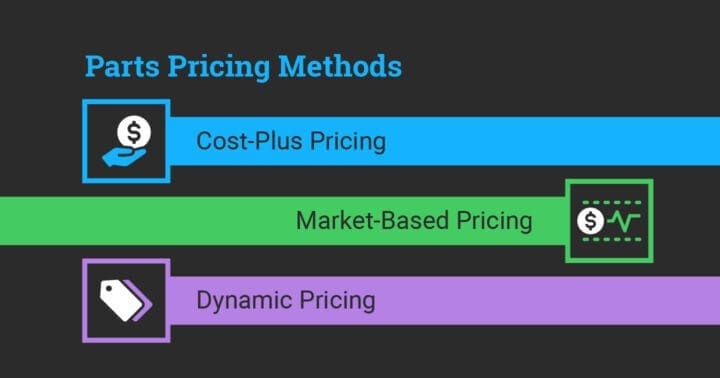
Repair shops and distributors must deploy practical pricing methods suited to their business models and market context. Choosing the right automotive parts pricing strategy ensures each part is priced for profitability, competitiveness, and customer appeal. Method selection often depends on competition intensity, operational goals, and the type of parts carried.
Cost-Plus Pricing
One of the most straightforward approaches is cost-plus pricing. Start by calculating your acquisition cost, including purchase price, shipping, and handling. Then, add a predetermined markup percentage or fixed dollar value to set the retail price. This strategy is easy to administer and guarantees your costs are covered. However, it doesn’t always account for fluctuating demand or competitive pricing, so you might sometimes lose sales to more agile rivals or miss out on higher margins when customer willingness to pay is greater.
Market-Based Pricing
Many businesses implement market-based pricing to stay relevant in crowded segments. In this method, you regularly monitor competitor prices and set your own prices to match or undercut them. The advantage is clear: you remain top-of-mind in price-sensitive categories and encourage customers to choose your parts over your competitors. The challenge lies in keeping up with rapidly changing prices. If you lag behind or focus solely on price, you may face shrinking margins or get caught in price wars that erode long-term profitability.
Dynamic Pricing
Dynamic pricing brings an extra level of sophistication. Using digital tools or software, you can adjust prices in real time based on current demand, stock levels, or even time of day. This method is popular among online parts retailers and large distributors. As a result, your business responds faster to customer trends and protects its margins when the market shifts unexpectedly.
What are the Types of Pricing Strategies?
Pricing strategies go beyond calculation methods. They shape how the market perceives your brand and steer your long-term growth.
Value-Based Pricing
Value-based pricing places customer perspectives at the center of your strategy. Here, you set prices according to the benefits and value each part brings. For instance, if a specific part resolves a major issue, provides a long warranty, or is difficult to source, you can charge more. Value-based strategies require a deep understanding of what matters most to your customers. Communicate the part’s unique features and demonstrate why its price is justified so customers recognize the value.
Additional Strategic Approaches
- • Penetration Pricing: Launch new product lines with low prices to build a customer base quickly, planning to gradually raise prices once the business is established.
- • Price Skimming: Set high introductory prices for new or exclusive products, then lower them as demand levels off or competition rises.
- • Bundling: Package related parts together to increase the average sale, move older stock, or offer additional value to customers.
Most savvy automotive parts departments blend these strategies. For instance, they may use penetration pricing to launch new categories and reserve dynamic or value-based pricing for premium brands or high-demand inventory.
What are the 4 Steps to a Pricing Strategy?
Building a robust pricing approach begins with a systematic process. A step-by-step framework ensures your choices are well thought out and aligned with broader business goals.
1. Set Clear Objectives
First, establish your priorities. Do you want to maximize profit, gain market share, move old inventory quickly, or redefine your brand image? Your objectives should guide every pricing decision. Without clarity, it’s easy to lose focus later.
2. Analyze Market Factors
Next, perform a comprehensive market analysis. Examine your customers: What do they value? How sensitive are they to price changes? Then, investigate your competitors: What are they charging, and how do they differentiate? Lastly, evaluate your product portfolio by identifying what parts are commodities versus exclusive or high-value items. This holistic view ensures you have the data needed to make informed, competitive pricing decisions.
3. Know Your True Costs
Understanding your true costs is critical to setting sustainable prices. Remember to include not just what you pay to suppliers, but also shipping, handling, storage, and proportional overhead. When you factor in all expenses, you prevent underpricing and ensure your business remains viable.
4. Launch, Monitor, and Refine Your Pricing
With data and goals in place, launch your pricing strategy. However, don’t see this as the finish line. Continuous monitoring is essential. Track key performance indicators, such as sales volumes, profit margins, and customer feedback. Be ready to adjust quickly as market conditions, cost structures, and customer needs evolve.
What are 3 Basic Pricing Strategies?
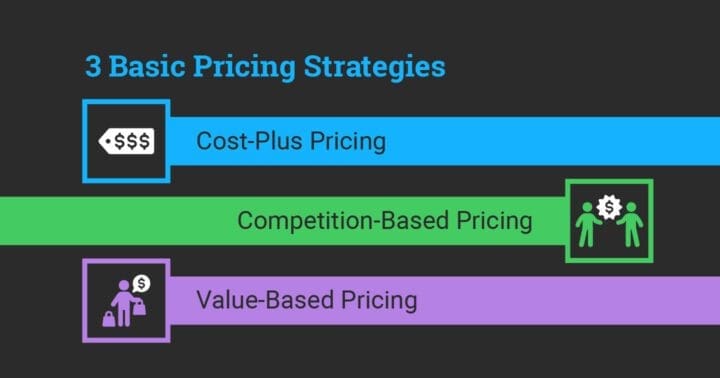
Many automotive parts departments use some version of these three foundational models:
- Cost-Plus Pricing: The staple approach—add a fixed margin over direct and indirect costs to set your price.
- Competition-Based Pricing: Set prices based on the prevailing market rate for the same or similar parts, responding to shifts in competitor approaches.
- Value-Based Pricing: Let customer perception of value shape your price. This requires detailed insight into what drives purchasing decisions for your audience.
It is rare for successful departments or businesses to stick to only one method. The most effective sellers combine all three, tailoring their formula by sales channel, product type, or even season.
How to Increase Parts Revenue
Growing your automotive parts revenue requires a multi-dimensional playbook. Fee increases alone are not always the answer. Instead, dealerships should seek sustainable gains from various angles. Implementing a thoughtful automotive parts pricing strategy across your inventory helps maximize revenue from high-demand items while keeping slower-moving stock competitive.
Embracing Matrix Pricing
Implementing matrix (tiered) pricing is proven to boost profitability. By applying higher markups to low-cost, quick-sale items and heavier discounts to expensive, slower-moving parts, you balance margin growth across your whole inventory. For instance, a $3 filter might carry a 300% markup, while a $1,000 sensor sees a more modest markup. This approach increases average profits without scaring off buyers of big-ticket components.
Amplifying Value-Based Pricing
Value-based pricing is especially effective for hard-to-find or problem-solving parts. By focusing on benefits, such as guaranteed fit, longer warranties, or delivery speed, you appeal to customers willing to pay more. Training your team to effectively communicate these unique selling points further lifts your revenue potential.
Additional Tactics for Revenue Growth
- • Bundle Offers: Group frequently purchased parts for streamlined sales.
- • Promotions: Deploy time-limited discounts or special offers to drive volume and accelerate the sale of aging stock.
- • Expand Inventory Variety: Monitor market trends, such as increased demand for parts for hybrid or electric vehicles, and expand your catalog to capture emerging customer segments.
- • Add Service Offerings: Pair parts sales with installation, diagnostics, or extended warranties.
- • Leverage Analytics: Regularly track sales, customer feedback, and inventory turnover, then refine your strategy based on actionable insights.
These combined practices create more opportunities for revenue, while ensuring a loyal customer base.
What is the Margin on Dealership Parts?
Parts margins are a foundational profit center for dealerships, typically between 30% and 40%. But these margins fluctuate based on multiple factors.
- • Low-Cost Items: Often marked up steeply (even above 200%) because customers are less likely to compare prices.
- • High-Cost Components: Offer lower percentage margins (commonly 20%–30%), but still deliver strong profits due to their higher sale price.
Dealerships also adjust markups for other reasons. Special manufacturer incentives or bulk purchasing can improve margins temporarily. On the other hand, warranty or recall work may prompt lower pricing, but bring in repeat customers and uphold brand reputation. The net margin is ultimately shaped by a blend of high-profit maintenance parts and lower-margin specialty items.
Justifying Premium Prices
To defend higher dealership prices, emphasize superior quality, fit, reliability, and after-sales support. Positioning your parts as more reliable than aftermarket alternatives helps justify the margin to discerning customers.
What are the Different Pricing Methods?
Adaptability is the key to ongoing success. No single pricing method works for all situations.
Essential Pricing Methods
- • Cost-Plus: Solid baseline for frequently stocked parts; ensures you don’t dip below a profitable threshold.
- • Matrix Pricing: Customizes markups, raising profits on certain segments without risking competitiveness elsewhere.
- • MSRP/List Pricing: Used when customers expect it, especially for warranty repairs or walk-in retail sales.
- • Competitive Pricing: Weakens price resistance by matching or beating dominant industry rivals.
- • Liquidation: Drives cash flow and reduces inventory backlog by slashing prices on obsolete or slow-moving products.
Using Blended Methods for Optimal Results
Smart businesses constantly review which method best fits each part. High-turnover parts might be set to market rates, specialty parts priced for value, and dead stock cleared via deep discounts.
Driving Growth Through Smart Parts Pricing
A sophisticated automotive parts pricing strategy is fundamental to profitability and sustained growth. Shifting away from simple, across-the-board markups helps capture more value from every transaction and keeps your dealership responsive to ongoing market changes.
Every business has unique opportunities and challenges. Prioritizing current market data, proven principles, and continuous refinement gives your dealership a lasting advantage. By proactively managing your pricing, you convert everyday sales into engines of growth.
Ready to take the next step? Contact our team of experts today. We’re committed to helping you create a custom pricing strategy that accelerates your dealership, drives profit, and builds your reputation as a leader in the industry.